After what was a somewhat eventful international break, it was time to return to normality and Premier League football. Surely nothing could spoil the excitement of club football. Little were the onlooking spectators to know that VAR would spoil the party not just once, but on multiple occasions over the weekend. It would be very easy to blame these issues on the VAR system itself, but the system isn’t the issue. Yet again it is the Referees that are the problem. The way referees are using VAR is appallingly bad, and certainly not the way in which it is intended to be used. I thought I’d take a look at each of the three major issues from the weekend, and see how better use of VAR by referees could improve things.
The first issue is that of a penalty not given for Watford against Spurs. The referee initially gave the wrong decision of not giving a penalty, when it was clear on the replay that Jan Vertonghen had taken two swipes at Gerard Deulofeu whilst on the ground. This should be a simple example of a ‘clear and obvious error’ made by a referee, and the decision is objectively wrong. Despite this, after going to VAR the decision wasn’t overturned. This utter lunacy from John Brooks, the VAR, highlights one of the major problems with the way VAR is used. He refused to overturn a decision already made by a referee, but also, like in every other use of VAR, the referee didn’t actually look at it himself on the screen between the dugouts. This screen is supposed to be a key part of the VAR system, and it is just that, when it is used in any other footballing competition. Just when the whole affair couldn’t get any more ludicrous, a VAR check on Dele Alli’s goal came up as ‘No Goal’ on the big screen. This was after the referee had confirmed the goal. There’s ‘teething problems’ and then there’s that.
Next up is Villa vs Brighton. Brighton had gone 1-0 up from a Webster header from a free kick (that shouldn’t have been a free kick, but ah well) and Villa had seemingly equalised before half time, when Conor Hourihane fired home from the edge of the box. There seemed nothing wrong with the goal until the dreaded ‘VAR check’ image came up on the big screens round Villa Park. The goal was then disallowed for a ‘foul in the build-up’ despite no one in the stadium having any clue that a possible foul had even occurred. The foul was by Wesley when he jumped and challenged the Goalkeeper, Matt Ryan, for the ball. Wesley slightly laid his arm on Ryan and that was apparently what made Ryan flap at the ball and only palm it away. I have a suggestion as to why Ryan flapped at the ball, he’s only six-foot-tall and isn’t very good at claiming crosses. Yes, goalkeepers have to be protected from harm, but there was absolutely nothing in this aerial challenge. That certainly wasn’t a ‘clear and obvious error’ by the referee, even the Sky commentator said Ryan ‘certainly wasn’t fouled’ when the incident initially happened. Yet again, the referee didn’t go to the small screen to look at it himself, which begs the question ‘what’s the point in installing them at every Premier League ground?’. Alan Shearer, the most vehement defender of VAR to this point, other than the Premier League and referees, even had a rant on Match of the Day saying that VAR is being implemented incorrectly and the screens need to be used. To rub some salt in the wound the same VAR and Referee team of Coote and Atkinson decided to not overturn a goal in the Manchester United vs Liverpool match, for a similar innocuous foul. The inconsistency in both refereeing and the use of VAR is the most infuriating part of it, because there is a genuinely good system in there somewhere.
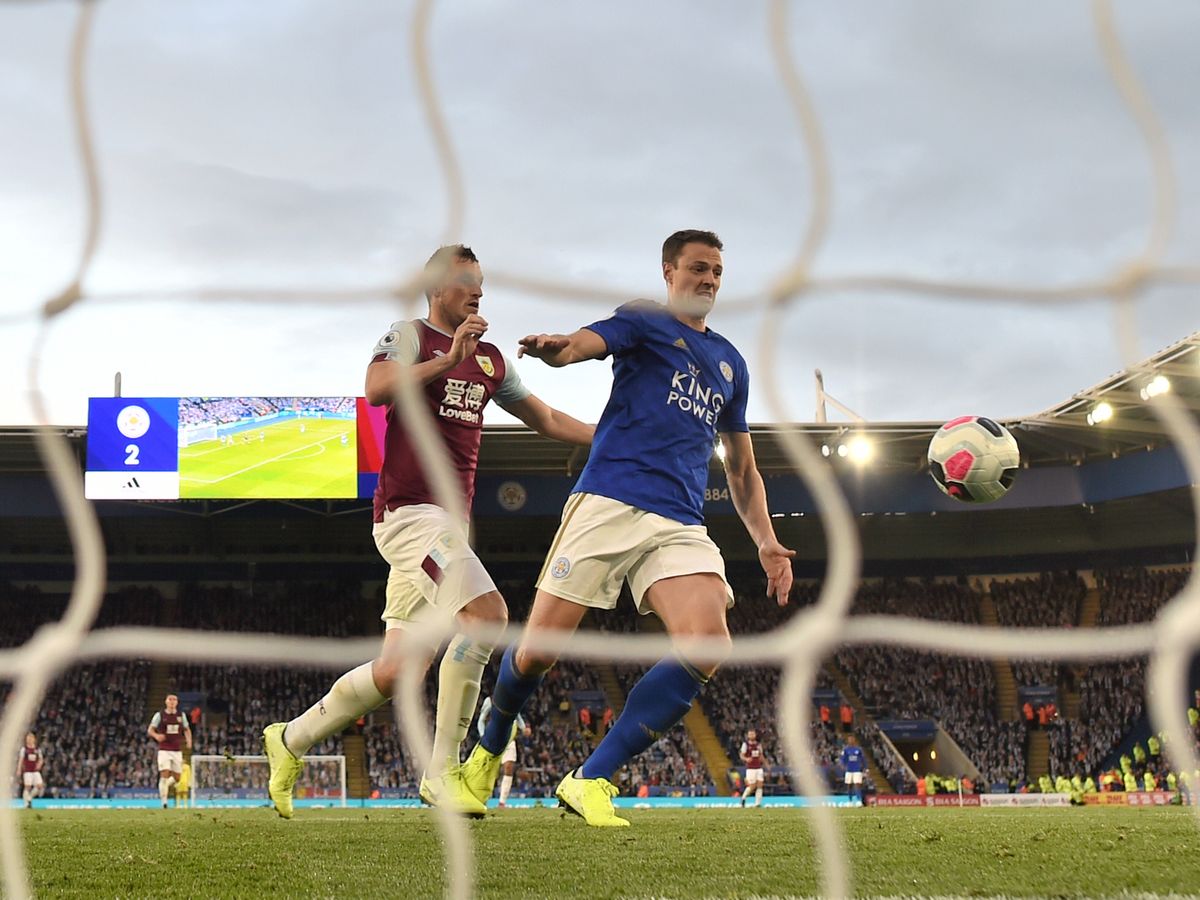
The final major example example is from Leicester vs Burnley. When Chris Wood scored for Burnley to make it 2-2 there seemed to be very little wrong with the goal, other than Johnny Evans theatrically throwing himself to the floor. However, Evans complaints lead to a VAR check. Even though there was minimal contact between Wood and Evans as the ball rolled over the line, and Evans wouldn’t have been able to clear the ball even if Wood hadn’t caught him, the goal was overturned. You can probably guess that once again, the referee didn’t look at the issue himself and so blindly went with what the VAR said happened. Burnley fans have every right to feel particularly aggrieved that they didn’t earn a valuable point. This is a huge example of where the screen for the referee should be used. The Professional Game Match Officials Limited however, is ‘pleased’ with how VAR has been implemented, a quite frankly astounding statement. They also told Referees to use the pitch side review areas ‘sparingly’, apparently sparingly actually means ‘under no circumstances’. Mike Riley also stated that the referees have to consider the flow of the game when deciding to use the screens. I would counter that by saying it takes long enough for the VAR to review it, so why not stop undermining the authority of the on-field referee and let him make the decision?
It was refreshing watching the Rugby World Cup Quarter Finals at the weekend, because there is a system that works. The flow of the game is hardly affected by the checks, and the on-field referee always has the final say on what happens. Most importantly, the right decision is made the great majority of the time. On top of this there is no shroud of secrecy as to why decisions have been made, everyone in the stadium can hear what’s going on. A far cry from the confusion in the Premier League. It may have taken a number of years to perfect the system, but I’m sure it has never been as much of a shambles as VAR is in the Premier League. Premier League referees need to stop being stubborn and drop the system all together until they can make it work in a less convoluted way.
 Jon Parkin Sports